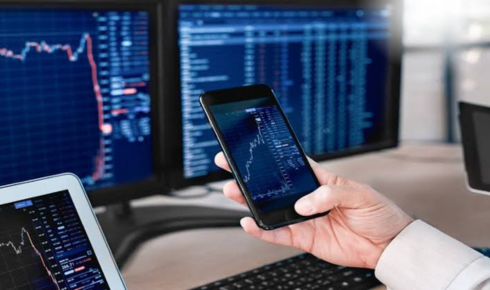
The Indian derivatives market has witnessed remarkable growth as traders and investors increasingly use advanced analytical tools to improve decision-making and market understanding. Many active traders regularly study the NSE Option Chain to evaluate market sentiment, identify important strike prices, and understand potential price movements in the broader market. Similarly, the Sensex Option Chain has become an important resource for market participants seeking deeper insights into index-based trading activity, volatility trends, and institutional positioning within the financial markets.
Growing Popularity of Options Trading in India
Due to growing market awareness and easy access to digital buying and selling platforms, options trading has become very popular among both regular and specialized investors. Derivatives trading was previously restricted to seasoned promoters with superior market expertise. Larger target groups now have easier access to buying and selling opportunities because to modern advancements and educational resources.
Because futures provide flexibility in controlling gadget risk, hedging portfolios, and spotting short-term buying and selling opportunities, investors are becoming more and more interested in them. In order to enhance their trading prospects, traders increasingly research volatility indicators, interest rate changes, and active market data.
The rise of mobile buying and selling apps and real-time market analysis tools has similarly expanded participation in options trading. Investors can now access live data, display market positions and instantly assess market sentiment through digital systems.
Much progress has also been made in financial literacy. Many investors now recognise the importance of disciplined evaluation rather than relying solely on hypotheses or emotional market reactions.
Importance of Market Sentiment Analysis
One of the most crucial components of profitable trading is comprehending the mood of the market. Investor expectations, institutional stance, monetary developments, and overall market confidence all have a significant impact on financial markets.
Traders can identify areas of strong trading interest by using option chain assessment. Higher free interest strike fees can produce areas of strong support and opposition that are keenly watched by market participants.
Because traders may compare where institutional play may impact random interest rate action, this data will be relatively relevant during times of market volatility. Compared to investors who primarily rely on price cues, those who are able to identify sentiment signals frequently make better trading decisions.
Sentiment analysis also allows traders to continue to be prepared for surprising market swings. Financial markets often react quickly to economic announcements, policy reforms, or international trends, making analytical education extremely important.
Another key benefit of emotion appraisal is emotion regulation. Traders who rely on grounded statistics and disciplined strategies are much less motivated by the use of panic or asymmetric optimism at some stage in normal risky trading sessions.
Understanding Open Interest and Trading Activity
Because it shows a number of active contracts in the market, open interest is one of the most often observed indicators of options buying and selling. Strong trading participation and market interest at those levels are frequently indicated by higher open interest individual strike costs.
To determine whether additional positions are opened or existing holdings are closed, traders keep a careful eye on variations in open interest rates. While increased open interest during the rate decrease could reinforce negative market predictions, rising open interest combined with rising costs could also provide more potent optimistic sentiment.
Because volume research enables purchasers to accurately measure market share, it is equally significant. Stronger market and liquidity confidence, which are essential for clean trading, is typically indicated by higher buy and sell spreads.
Combining interest rate movements with free interest expansion analysis provides a more complete knowledge of market performance. Traders using two markers together often increase the accuracy of their market analysis.
Role of Technology in Modern Trading Analysis
By providing retail investors with easy access to real-time market data, technology has fundamentally altered the enjoyment of trading. Emerging derivatives valuations have already been made publicly accessible to professional industry bodies and institutional participants. Through contemporary buying and selling methods, traders of both genders can now access specialized market analysis.
Real-time option chain reporting, volatility estimation, free interest rate tracking, and improved charting capabilities are now available in a matter of seconds through digital buying and selling tools. Investor awareness of the economy has increased and market involvement has improved as a result of this accessibility.
Traders can efficiently monitor necessary market positions with the use of customisable dashboards and automated notifications. Investors may now prefer not to use time-market statistics or to rely solely on human computations.
In addition to technology, there is progress in educational access. Many traders are now researching better analytical standards through digital systems, webinars, and market research tools. This developing knowledge has contributed to extra-disciplined buying and selling behaviour within the retail industry.
Another main advantage of time is speed. Real-time execution and available instant facts help buyers quickly react to changes in market conditions at all levels with added efficiency.
Importance of Risk Management in Options Trading
Although options trading has a lot of opportunity, it also carries a lot of danger if not done responsibly. Disciplined probability management is essential for long-term business performance because market volatility causes quick changes in payments.
Before making a trade, successful traders typically disclose their risk level, stop losses, and pure entry locations. These steps lessen the establishment of emotional selection and help protect investments during unfavorable market movements.
Overtrading is a common practice, particularly in active derivatives markets. Sometimes, in the face of unstable circumstances, retailers take excessive risks without adequate planning, which can greatly increase financial stress.
Stability in purchases and sales is enhanced by diversification and risk management. Traders who avoid concentrating all of their money on a single market image typically exhibit better financial discipline and emotional stability.
Patience is just as important. Sustainable buy and sell fulfilment generally comes from daily execution and disciplined analysis as opposed to competing assumptions or impulsive decisions.
Future of Data-Driven Trading in Indian Markets
Given how quickly technology, financial literacy, and digital infrastructure are developing, the future of Indian derivatives trading seems quite bright. Data-driven tactics and analytical tools are becoming more and more popular among traders as a way to increase market comprehension and trading effectiveness.
Future trading methods are anticipated to be significantly influenced by automated trading systems, enhanced analytics, and artificial intelligence. Investors are shifting away from purely speculative behavior and toward rigorous analysis, risk management, and long-term consistency.
Additionally, there has been a steady improvement in educational knowledge of derivatives trading. The significance of volatility analysis, market psychology, and structured trading strategies is now recognized by many traders.
The continued growth of digital trading platforms is likely to attract broader market participation from professionals, entrepreneurs, and young investors interested in financial markets. Traders who combine analytical discipline with strong risk management practices are generally better positioned to navigate market volatility successfully and build long-term trading confidence.